



Genuine Moonstone Bracelet: How to recognize a real stone?
Introduction
In the vibrant world of lithotherapy and costume jewelry, the appeal of minerals with soothing properties and dreamy aesthetics has never been stronger. At the forefront of this wave of popularity is the moonstone, a milky gem with elusive reflections that fascinates as much by its beauty as by its deep symbolic connection to femininity and intuition. However, this immense renown has an inevitable downside: the market is now saturated with fakes, clever imitations, and misleading trade names. When one wishes to acquire a moonstone bracelet, whether to benefit from its extraordinary vibrational properties or to invest in a quality piece of jewelry, the ability to distinguish the real from the fake becomes an absolutely crucial skill. It would indeed be a shame to expect energetic support from a bead that is ultimately only dyed industrial glass. The discerning eye, aided by knowledge of the geological phenomena specific to this feldspar, is the best shield against scams. This comprehensive guide is designed to provide you with precise observation tools, technical tests, and undeniable clues that will allow you to authenticate your future lunar adornment within your jewelry without any doubt.

Physical characteristics of an authentic gem
A true gem made of natural stones carries within it the indelible signature of the colossal geological processes that shaped it. The careful observation of its internal structure and its behavior when exposed to light is the first act of authentication.
Adularescence versus artificial reflections
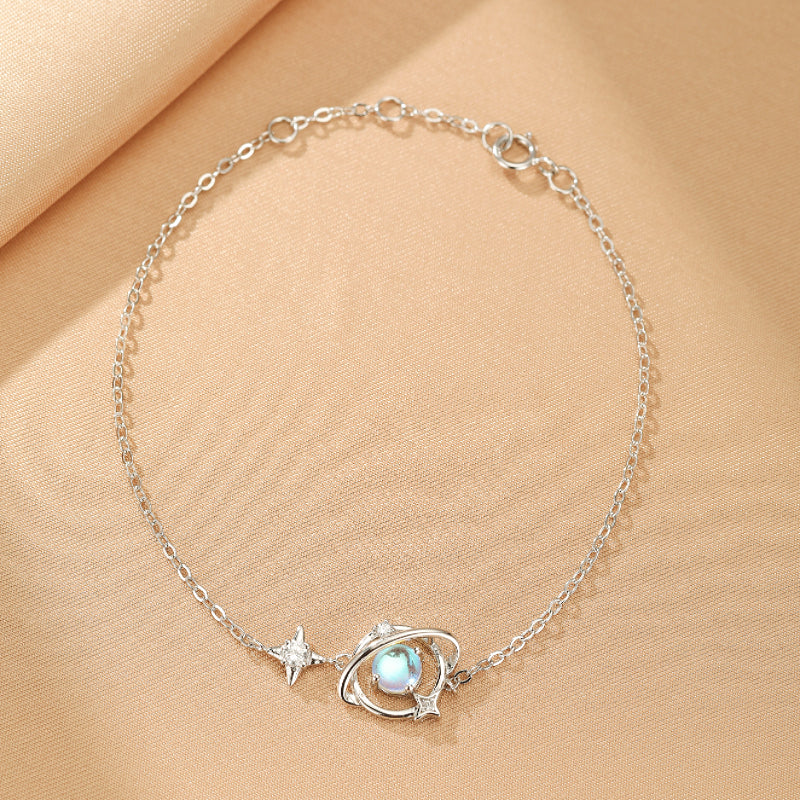
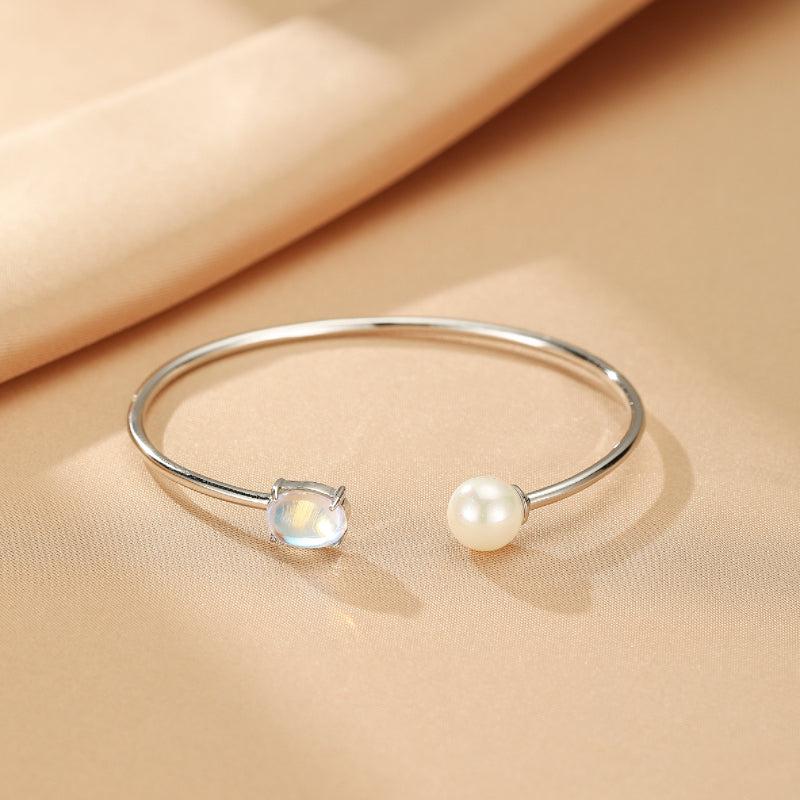
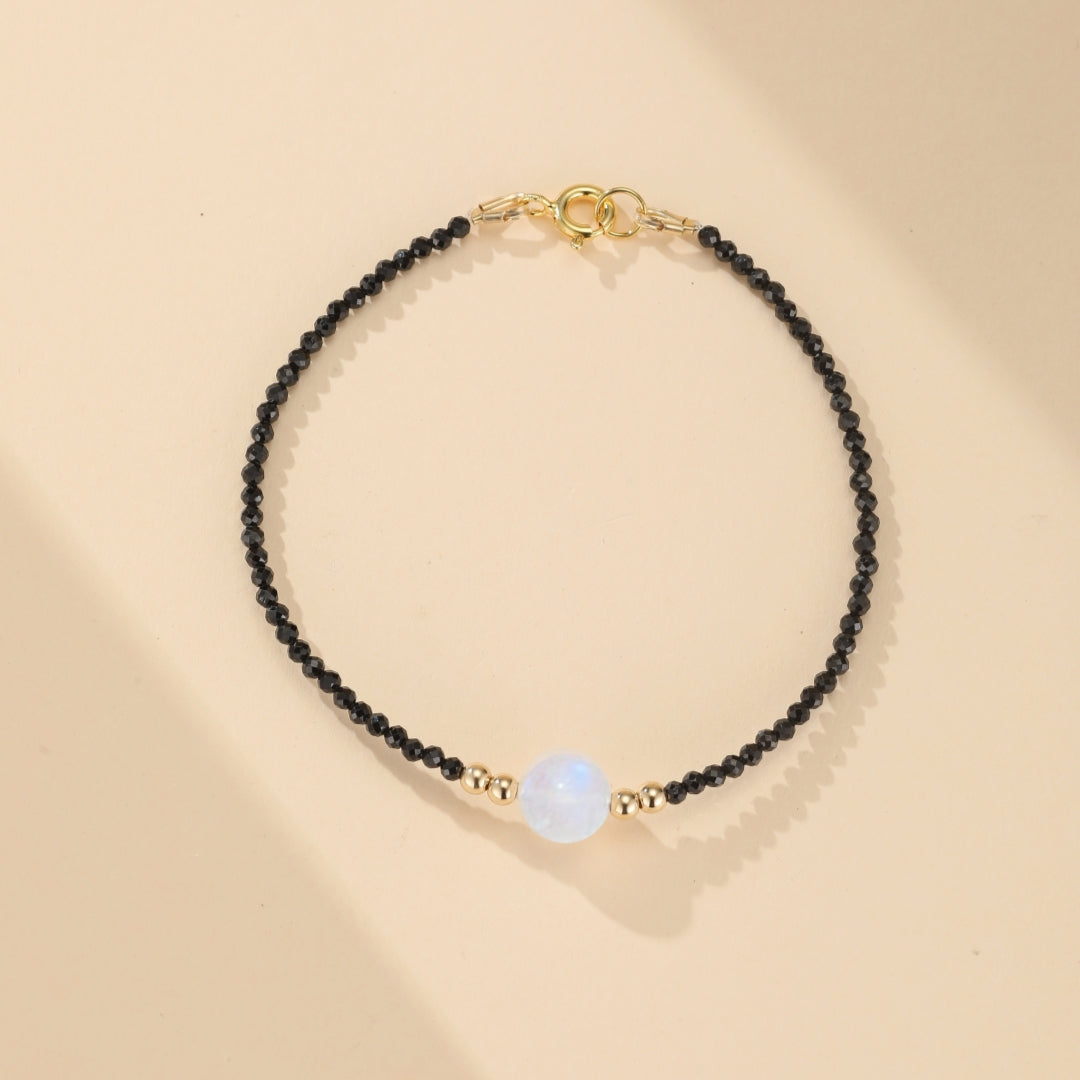
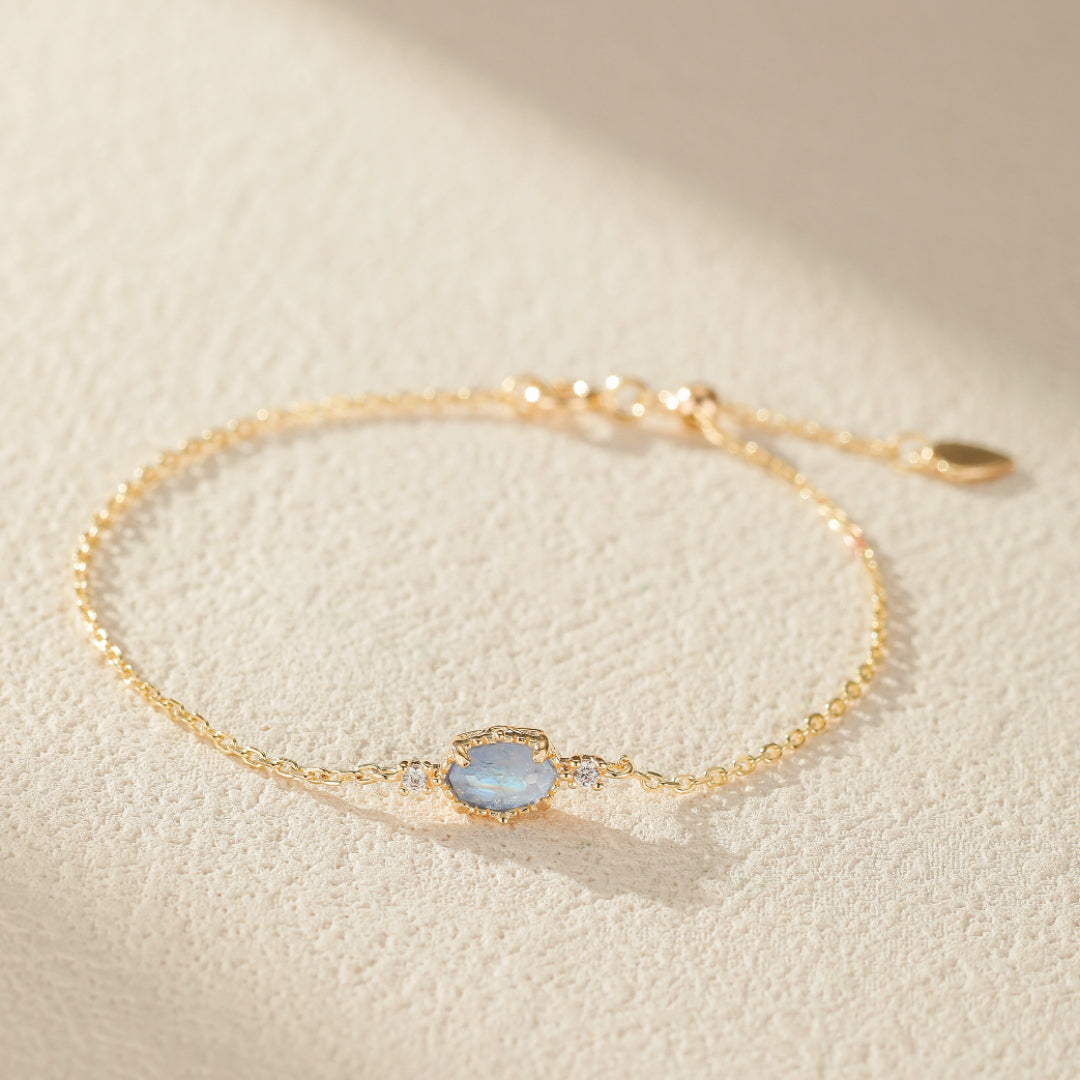
The undeniable identity card of this stone lies in its optical phenomenon, adularescence. This internal reflection, generally silvery white or a striking electric blue, is never found on the strict surface of the bead. When you slowly rotate the moonstone bracelet under a directional light source (such as a desk lamp or the sun, not diffuse light), the glow should appear to float within the mineral mass and follow your movements fluidly. In plastic or resin imitations, the reflection is often caused by a surface coating (an iridescent chemical treatment) that shines statically and aggressively. The reflection of a real mineral is mysterious, almost elusive from certain angles, and suddenly reveals itself, like a luminous mist appearing at the heart of the rock.
The importance of natural inclusions and flaws
The most frequent mistake of unsuspecting buyers in jewelry is to seek absolute perfection, associating total purity with quality. In the world of natural stones, transparency without the slightest defect is extremely rare and very expensive. An affordable bracelet made of perfectly translucent beads, without any blemish, without any internal line, and completely identical to each other is 100% guaranteed to be made of synthetic glass. A true moonstone has a layered appearance, called "centipede structure." By looking closely, you should see tiny internal growth cracks, thin superimposed layers, or even microscopic inclusions of other minerals. These "defects" are nature's fingerprints proving the geological authenticity of your jewelry.
The revealing thermal test of the material
Minerals are excellent thermal conductors. This test, well known to lithotherapy experts, consists of using your own body's sensitivity. Grasp the bracelet and place one of the beads directly on a sensitive area of your skin, such as your cheek or the tip of your nose, after letting it rest for a few minutes at room temperature. A real stone will provide an intense and immediate cold sensation and will take several seconds to warm up to your body heat. Plastic, resin, or opaline (a special glass), on the other hand, will reach body temperature almost instantly. This is an empirical but formidably effective test to immediately eliminate the majority of crude industrial counterfeits.
Common imitations in the jewelry market
To avoid traps, one must first know the enemy. The market is full of substitutes that play on visual confusion and ambiguous semantics to deceive the uninformed buyer looking for beneficial vibrations in their jewelry.
Confusion with opaline or milky glass
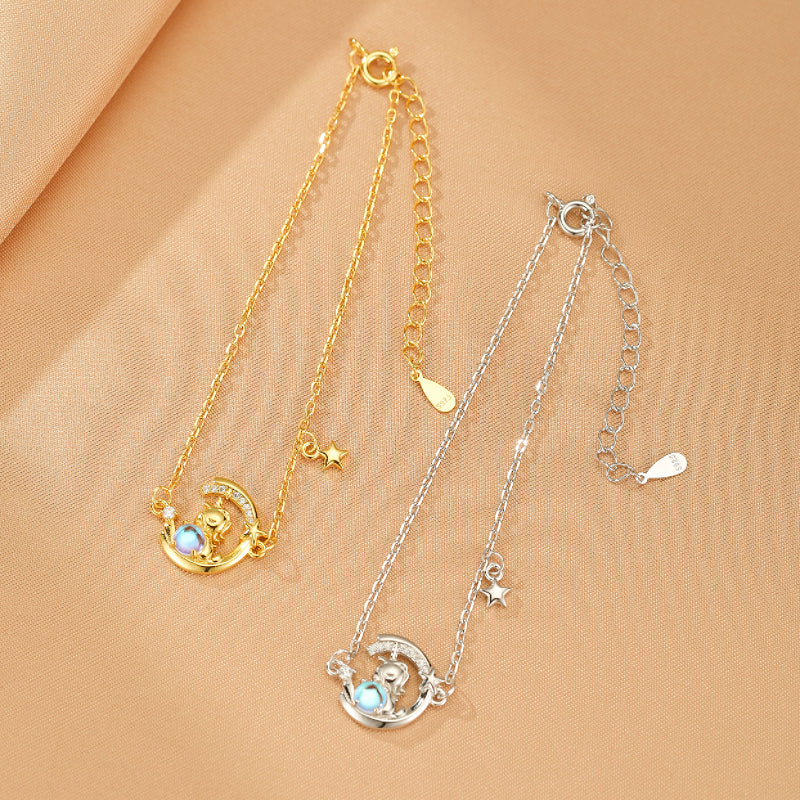
The most commonly sold imitation under the misleading name of "moonstone" is opaline (sometimes called synthetic moonstone). This is a man-made opalescent glass, often with added phosphates or fluorine to achieve a milky color with permanent bluish reflections. While opaline is undeniably pretty, it is completely devoid of any lithotherapy energy since it is artificial. How to recognize it? Opaline has a perfectly uniform background, without the slightest internal flaw, and its bluish reflection is omnipresent and very (or even too) pronounced regardless of the viewing angle, whereas the true gem requires searching for it with the eye. Moreover, against the light, opaline often takes on a strangely orange or reddish hue, betraying its vitreous nature.

The specific case of white labradorite
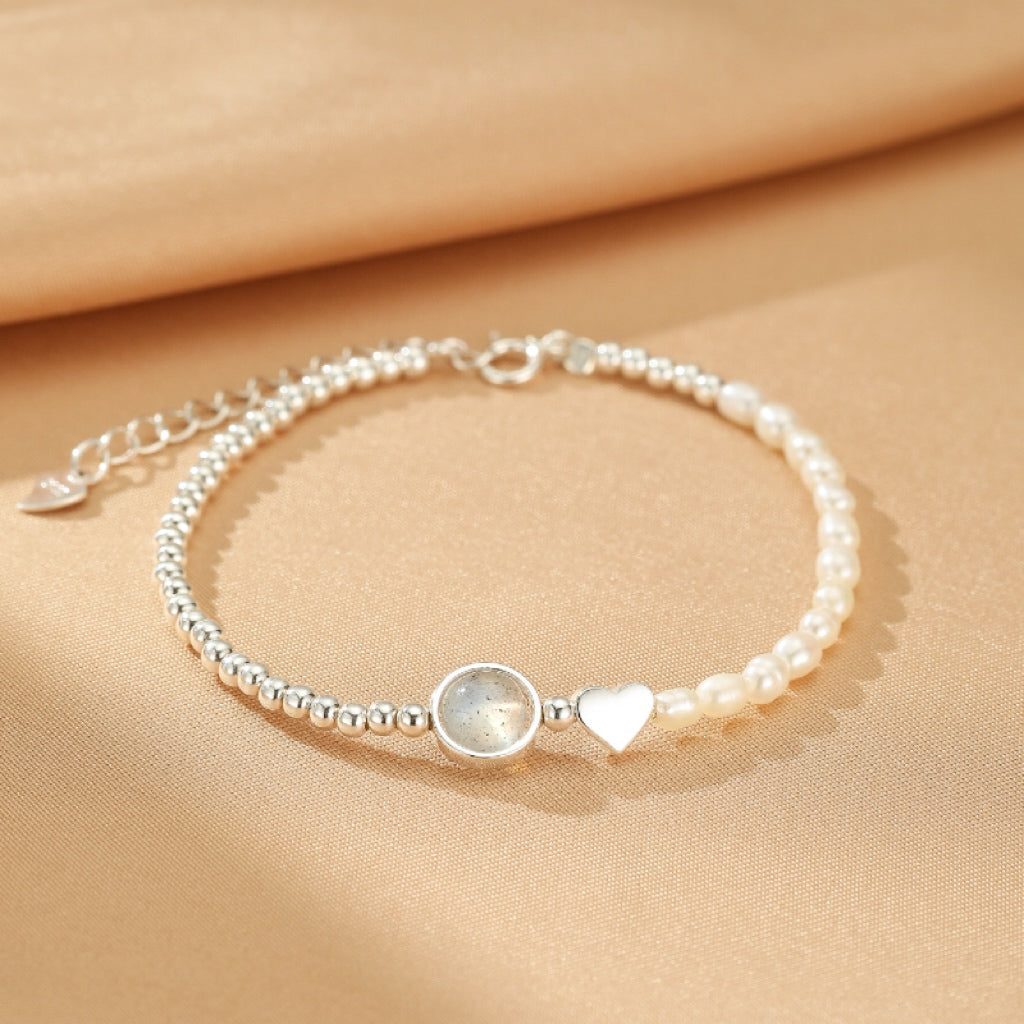
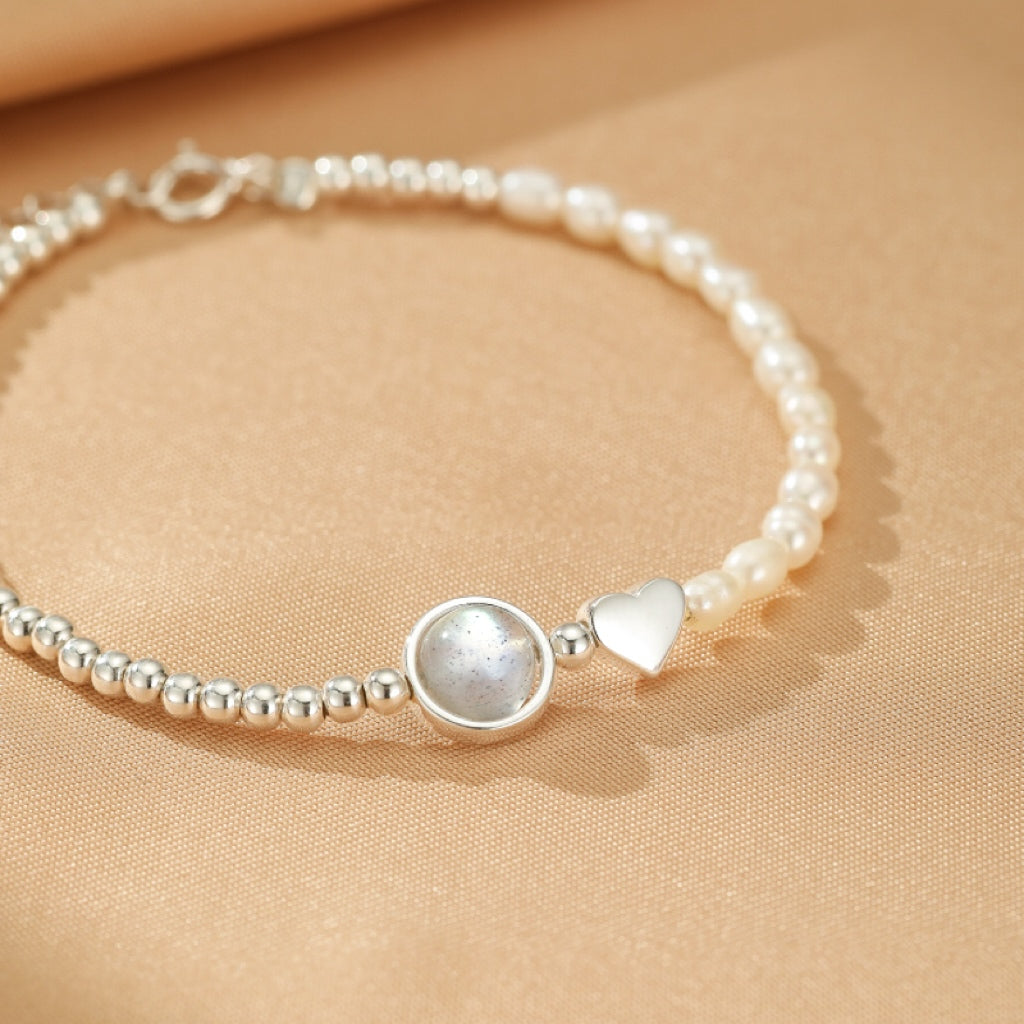
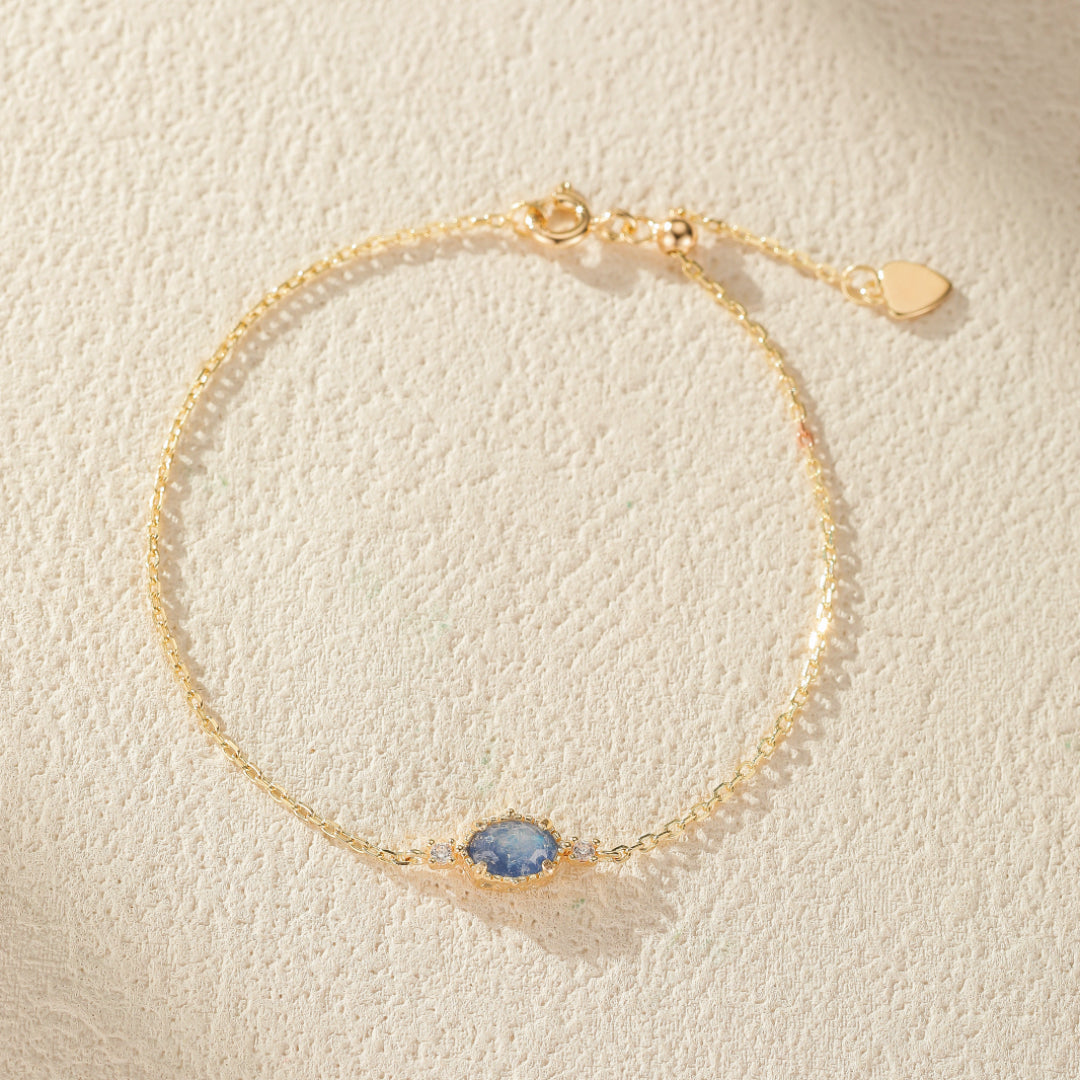
Here is the trickiest trap, because it involves another authentic stone. What many merchants call "rainbow moonstone" is technically not orthoclase (the real moonstone), but white labradorite. Although both belong to the large feldspar family, they are distinct geological sisters. Real moonstone only shows white or blue reflections related to adularescence. If your moonstone bracelet displays superb multicolored flashes, with bright yellow, pink, or green, you are in possession of white labradorite. Although it is a true natural stone with powerful protective virtues, it is important to be informed of its true mineralogical nature so as not to feel shortchanged by a purely marketing appellation.
Chemical treatments and dyed stones
Less common but equally misleading in jewelry, the practice of dyeing involves taking low-value, neutral-colored minerals (such as white agate or low-quality milky quartz) and heating or injecting them with chemical dyes to simulate the mystical blue of adularescence. The result is often obvious: the blue color is concentrated in the stone's cracks (which absorb the dye) instead of floating in its heart. A swab of cotton wool soaked in a mild solvent like 90% alcohol on these cracks will reveal the deception, with the cotton slightly staining blue. Caution is therefore advised when faced with colors that are too garish or unrealistic.
Selection criteria for a secure purchase
Vigilance during acquisition is your best ally in lithotherapy. By combining material observation with an evaluation of the sales context, you ensure that you bring home a pure talisman, endowed with its full vibrational power.
The weight and density of the bracelet on the wrist
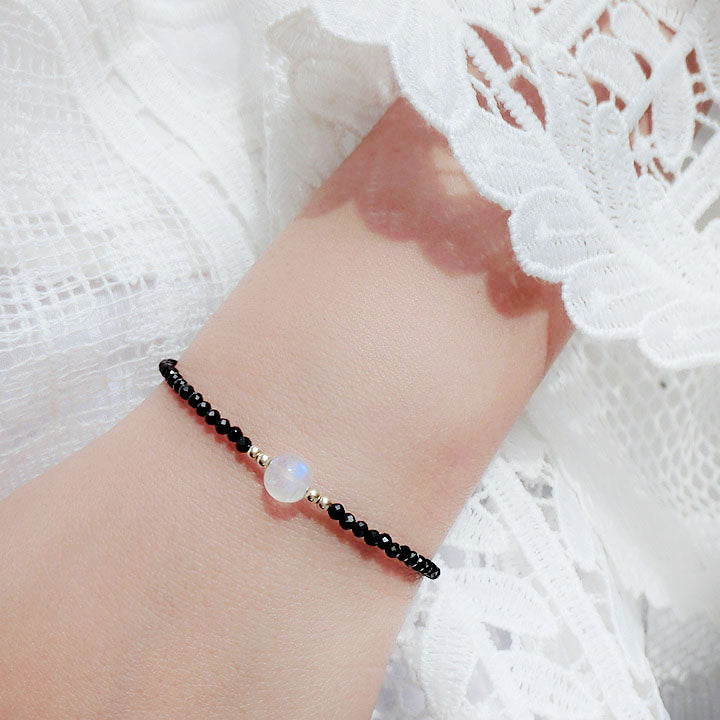
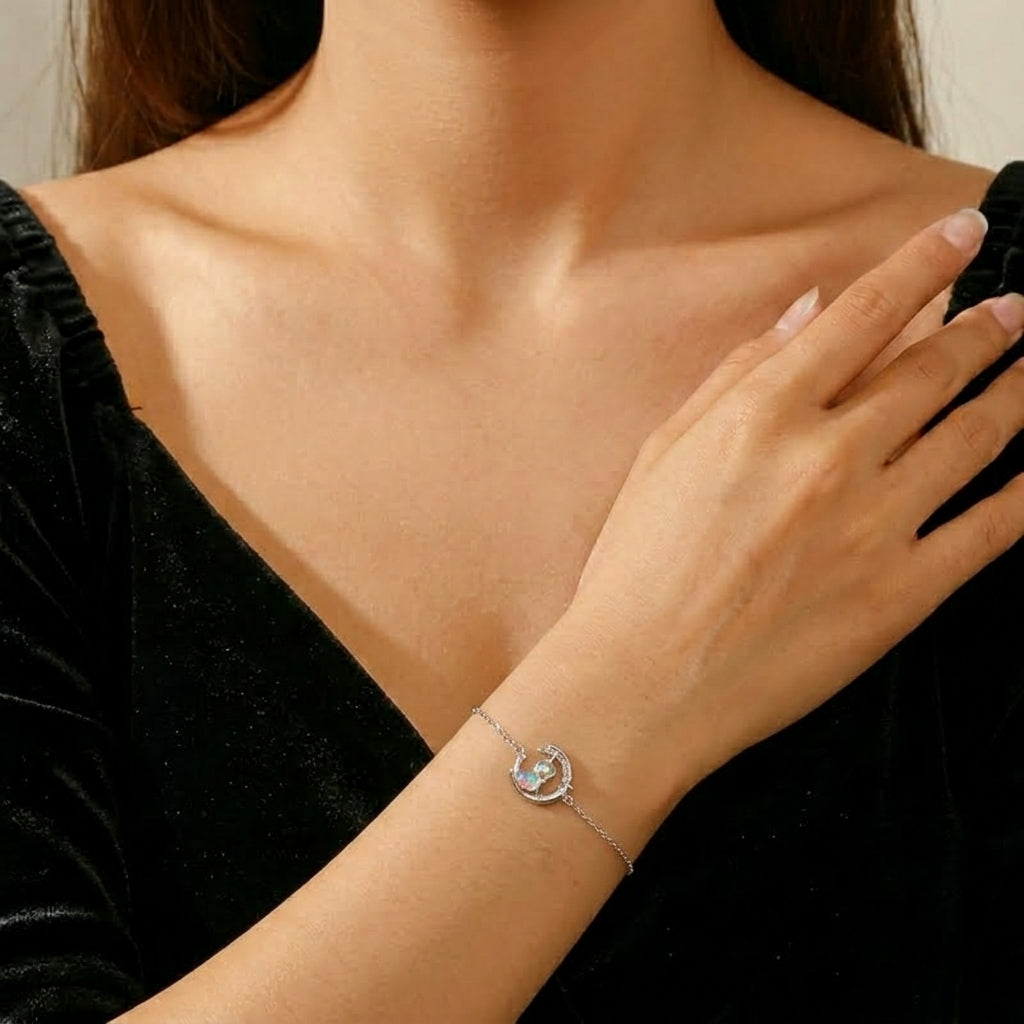
Density is a measurable scientific data. A natural rock will always be significantly heavier than its plastic or resin equivalent. If you have the opportunity to weigh the piece of jewelry before purchase, a full moonstone bracelet with eight-millimeter beads should have a satisfying and reassuring weight in the palm of your hand. If the necklace or bracelet seems abnormally light, "feathery," run away. The true mineral possesses this physical presence characteristic of the earth that asserts itself from the first grasp, instantly anchoring the jewelry in its material and natural dimension.

Analysis of the regularity of mounted beads
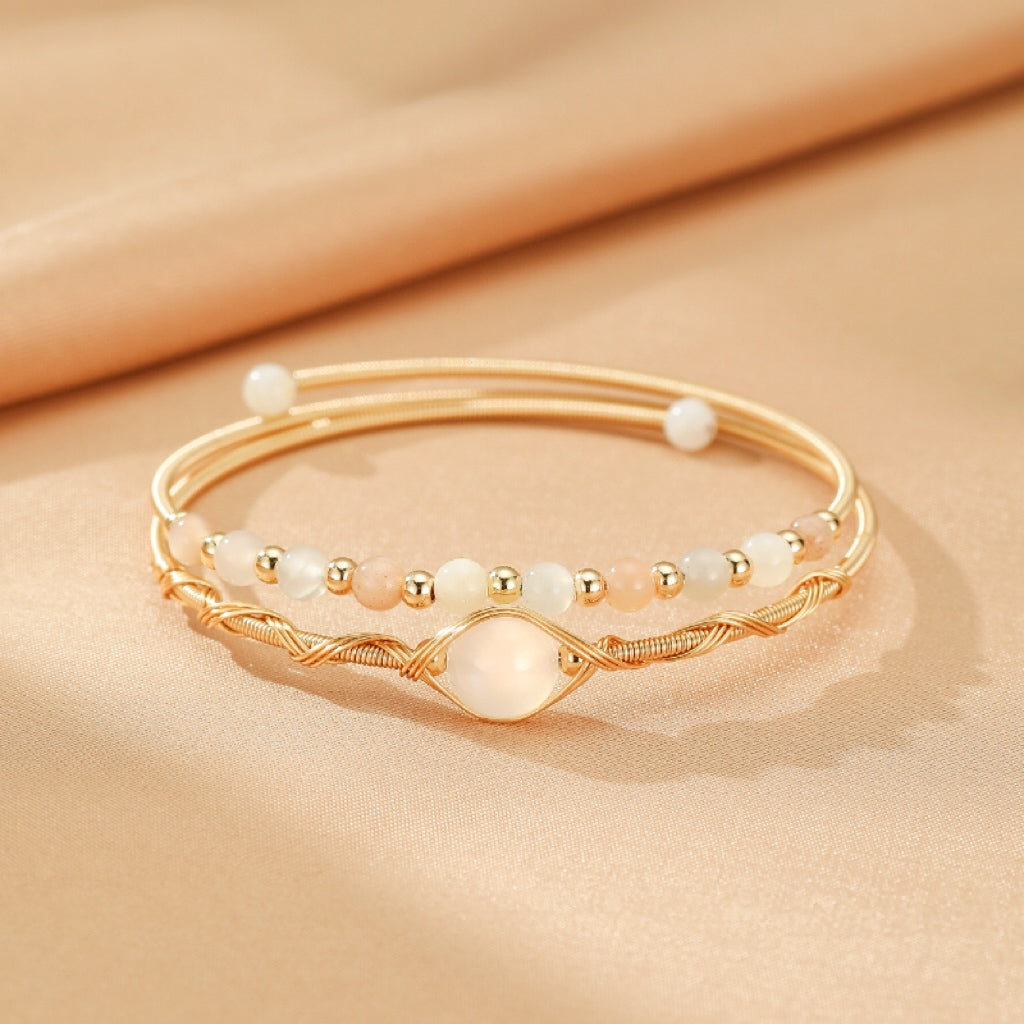
Nature is the greatest artist, but she abhors industrial conformity. In an authentic lithotherapy bracelet, each bead is cut from a different rock fragment. Therefore, each sphere must have a unique face among your natural stones. The bluish flashes related to adularescence will not be of the same intensity everywhere, some beads will be milkier, others more transparent, and the internal inclusions will vary in shape and position. If you unroll the jewelry before your eyes and observe that each bead is an absolute clone of its neighbor, perfectly sized, flawless, and with an identical reflection, the probability of synthetic manufacturing from a mold is almost 100%.
The importance of origin and expertise
Finally, authentication also involves evaluating the distribution channel of your jewelry. Ephemeral online stores with ridiculously low prices or non-specialized globalized sales platforms are the main suppliers of imitations. Turn to recognized artisan jewelers in jewelry, specialized mineralogy stores, or trusted lithotherapists. A reputable seller should be able to tell you the geographical origin of the gem (Sri Lanka for the bluest ones, India, Tanzania, or Madagascar), use the correct gemological terms (differentiate between opaline, labradorite, and orthoclase), and will never be afraid to guarantee the natural origin of their products. Price is also an indicator: a genuine gem requires complex extraction and meticulous cutting to respect the axis of the reflection, which justifies an acquisition cost that cannot be negligible.
Conclusion
Knowing how to recognize a genuine moonstone bracelet is an essential step for anyone wishing to invest in the pure beauty and powerful energetic benefits of nature through lithotherapy. By arming yourself with basic knowledge of the mystery of adularescence, performing the temperature test, and rejecting false industrial perfection, you reduce the risk of deception when purchasing your jewelry. Putting a little more care into selection and budget into the purchase guarantees the acquisition of an authentic vibrational shield and a rare poetic aesthetic. Wearing a true fragment of lunar rock around the wrist, with all its fascinating little imperfections, is to honor yourself with the privilege of vibrating at the same rhythm as the ancestral and mysterious forces of our planet.
Read more

Moonstone is an emotional sponge that requires rigorous care to maintain its powerful vibration. Discover gentle methods for purifying it with water or fumigation, and learn how to effectively rech...

Although they share a fascinating milky whiteness, mother-of-pearl and moonstone have diametrically opposed origins. From the protective ocean to volcanic magma, learn to differentiate the iridesce...
Leave a comment
This site is protected by hCaptcha and the hCaptcha Privacy Policy and Terms of Service apply.