



Introduction
Turquoise, that captivating natural crystal with its enchanting blue, has fascinated for millennia. A symbol of empathy, protection, and harmony, it is cherished for both its beauty and its many virtues. Used by ancient civilizations and incorporated into prestigious jewelry, this blue crystal boasts a history as rich as its benefits.
Let's discover together the secrets of turquoise, from its legendary origins to its incredible powers over body and mind.
The fascinating history of turquoise: A cherished crystal since antiquity
For thousands of years, turquoise has been considered a sacred crystal. Its unique radiance and protective properties have made it an indispensable symbol in various cultures around the world.
A precious crystal for pharaohs and emperors
Ancient Egypt held turquoise in particular reverence. Pharaohs wore it as amulets to ensure protection and prosperity. Cleopatra herself is said to have made it an essential element of her royal adornments.

Among the Aztecs, turquoise was reserved for emperors and warriors. Additionally, they inlaid it into their masks and weapons to capture divine energy and ward off negative forces.
The origin and formation of turquoise: A gift from nature
This beautiful crystal forms deep within the Earth through a complex geological process that gives it its unique color and exceptional properties.
A crystal formed from rocks rich in copper and aluminum
This blue crystal is formed when mineral-rich groundwater infiltrates rocks rich in copper and aluminum, leading to a chemical reaction that creates turquoise.
It is found mainly in Iran, the United States (particularly Arizona), China, and Tibet. Each region produces turquoise with unique shades, ranging from intense blue to light green.
Why does turquoise change color?
A fascinating characteristic of this natural crystal is its ability to change hue. Over time, exposure to sunlight, heat, or contact with skin can alter its color. This is due to the absorption of oils and moisture, which modifies its chemical composition.

Indeed, in some cultures, this change is believed to be a premonition of an important event or imminent danger.
The virtues of turquoise: A crystal with multiple benefits
For centuries, this magnificent crystal has been used for its incredible virtues. Indeed, it acts on the mind, body, and spirit, bringing balance and harmony to those who wear it.
Psychic benefits to soothe the mind
Turquoise is renowned for its ability to calm anger and strengthen empathy. It allows for a better understanding of others' emotions and promotes more fluid communication.
This blue crystal also helps to overcome shyness and express oneself with confidence. It improves active listening, thus facilitating friendly and romantic relationships.
Thanks to its gentle vibrations, it also stimulates romance and strengthens emotional bonds. In some traditions, it is even offered as a pledge of love and fidelity.
-
Product on sale
 Turquoise Earrings – Maritime Shell, Silver Plated GoldThe original price was: $115.00.$89.00The current price is: $89.00.
-
Product on sale
 Moonstone Ring – Floral Turquoise, Silver Plated GoldThe original price was: $89.00.$69.00The current price is: $69.00.
-
Product on sale
 Handcrafted Dream Catcher ‘The Blue’ in TurquoiseThe original price was: $45.00.$32.00The current price is: $32.00.
A precious ally for the body
On a physical level, turquoise possesses remarkable healing properties. It is known to stimulate the heart, thereby strengthening blood circulation and the oxygenation of organs.
It is also used to relieve migraines and reduce muscle tension. In lithotherapy, it is often recommended for people suffering from chronic pain or intense fatigue.
Finally, this natural crystal promotes restorative sleep. Placed under the pillow, it helps to calm the mind and prevent nocturnal awakenings.
A spiritual crystal that opens the throat chakra
On a spiritual level, this blue crystal is associated with the throat chakra, which governs communication and personal expression. When blocked, it can manifest as difficulty speaking, lack of authenticity, or fear of judgment.
This blue crystal helps restore balance to this chakra, thereby promoting sincere and fluid expression. It is particularly beneficial for artists, writers, and speakers who seek to convey their ideas with clarity.
How to use and care for turquoise?
To fully benefit from the properties of turquoise, it is important to know how to use and care for it correctly.
How to wear turquoise daily?
Wearing this natural crystal as jewelry is one of the most effective ways to benefit from its positive energies. A turquoise pendant, close to the throat chakra, can improve communication.
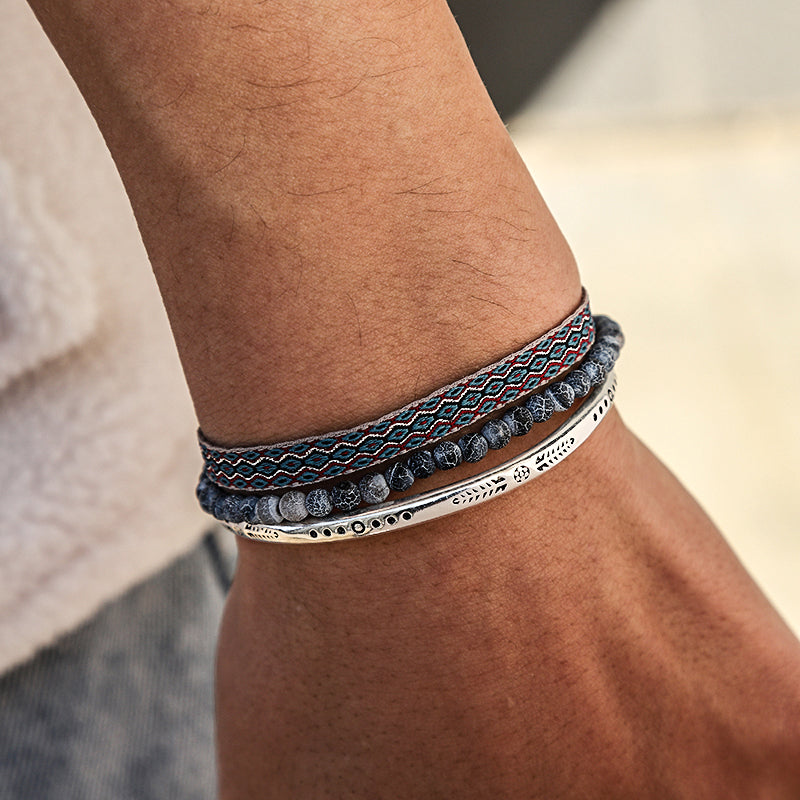
Turquoise rings and bracelets are also very popular, especially for their protective effects. In some cultures, it is believed that they absorb negative energies and transform them into positive vibrations.
-
 Turquoise Bracelet – Sea Foam Breath, 925 Silver$32.00
-
Product on sale
 Turquoise Necklace – Ancestral Breath, SilverThe original price was: $39.00.$28.00The current price is: $28.00.
-
 Pearl and Turquoise Set – AzurePrice range: $35.00 to $42.00
Purification and recharging of the crystal
This blue crystal requires regular purification to maintain its properties. Demineralized water can clean it, while saltwater risks altering it.
To recharge it, place it on an amethyst geode or expose it to moonlight. Unlike other minerals, turquoise does not tolerate sunlight well, which could cause it to lose its luster.
Conclusion: A blue crystal with unique powers
In conclusion, turquoise is much more than a simple ornament. This natural crystal possesses a fascinating history and exceptional virtues. Whether it's to strengthen communication, soothe the mind, or protect against negative energies, it remains a precious ally.
Embraced by ancient civilizations and still appreciated today, this blue crystal continues to captivate those seeking balance and well-being. Do you wish to discover its benefits for yourself? Choose a turquoise jewel and let yourself be enveloped by its benevolent energy.
FAQ: Everything you need to know about turquoise
1. Why is turquoise so popular?
Its unique blue color and powerful protective properties make turquoise fascinating. Since ancient times, civilizations have used it for its benefits to the mind and body. In lithotherapy, it symbolizes empathy, communication, and emotional balance, making it a highly sought-after crystal.
2. Is turquoise a precious crystal?
No, it is classified among fine crystals, unlike diamonds or sapphires. However, deep blue and pure turquoises can reach high prices, especially those from Iran or Arizona.
3. How to recognize a real turquoise?
A real turquoise has a slightly porous texture and a natural color. Imitations are often dyed howlite. A simple test is to rub the crystal with a cotton swab soaked in acetone: if the color rubs off, it's a fake.
4. Can turquoise be worn every day?
Yes, but this natural crystal is fragile. It is sensitive to shocks, salt water, and chemical products. It is best to remove your turquoise jewelry before swimming or applying perfume.
5. Why does my turquoise change color?
This blue crystal is porous and absorbs oils, humidity, and perspiration, which can slightly alter its hue. Prolonged exposure to sunlight can also change its color.
6. Which astrological signs are linked to turquoise?
The turquoise crystal is associated with Sagittarians, Pisceans, and Aquarians. It promotes serenity, self-expression, and balanced decision-making.
7. Where are the best turquoises found?
The most renowned deposits are located in Iran, Arizona, Tibet, and China. Iran is famous for its deep blue and pure turquoises, highly prized by jewelers.
8. How to purify and recharge a turquoise?
Purify it with demineralized water or smoked sage. To recharge it, place it on an amethyst geode or expose it to moonlight.
9. Does turquoise really protect against negative energies?
Yes, it absorbs negative energies and restores harmony. Many cultures consider it a crystal of protection and luck.
10. Which turquoise jewelry to choose?
A pendant improves communication, a ring balances emotions, and a bracelet strengthens self-confidence. Choose the one that suits your needs!
Read more
Jade, a fascinating natural crystal, comes in several colors, each carrying a unique meaning in jewelry. A symbol of harmony, prosperity, or protection, it enhances jewelry creations. Discover the ...
Labradorite is a fascinating natural crystal, known for its changing reflections and numerous virtues. Originating from Canada, it protects against negative energies, strengthens the immune system,...
Leave a comment
This site is protected by hCaptcha and the hCaptcha Privacy Policy and Terms of Service apply.