

Genuine Rose Quartz: 5 Tips to Ensure You Get Quality
Table of Contents
Introduction
In the flourishing world of lithotherapy and wellness jewelry creation, the enthusiasm for crystals with soothing properties has reached unprecedented heights. At the heart of this enthusiasm, rose quartz reigns supreme, coveted for its soft color and its reputed emotional healing properties. However, this immense popularity has led to an unfortunate but inevitable consequence: the market is now flooded with imitations, low-quality chemically modified stones, and cleverly tinted synthetic glass. Buying a natural stone should be an act of trust and an investment in one's own vibrational balance, but it can quickly turn into disappointment if one does not possess the right knowledge. Knowing how to distinguish an authentic crystal from a counterfeit has become an essential skill for any admirer of holistic jewelry. This technical and detailed guide delves into the mineralogy of this fascinating gemstone and reveals five professional and infallible tips to evaluate the quality, purity, and authenticity of your future rose quartz, ensuring the integrity of your energetic practices.

Understanding the Mineralogical Nature of Rose Quartz
To avoid the pitfalls of counterfeiting, it is essential to understand what truly constitutes the geological and chemical essence of this mineral, as nature always leaves indelible signatures that human industry struggles to imitate perfectly.
Geological Formation and Natural Inclusions
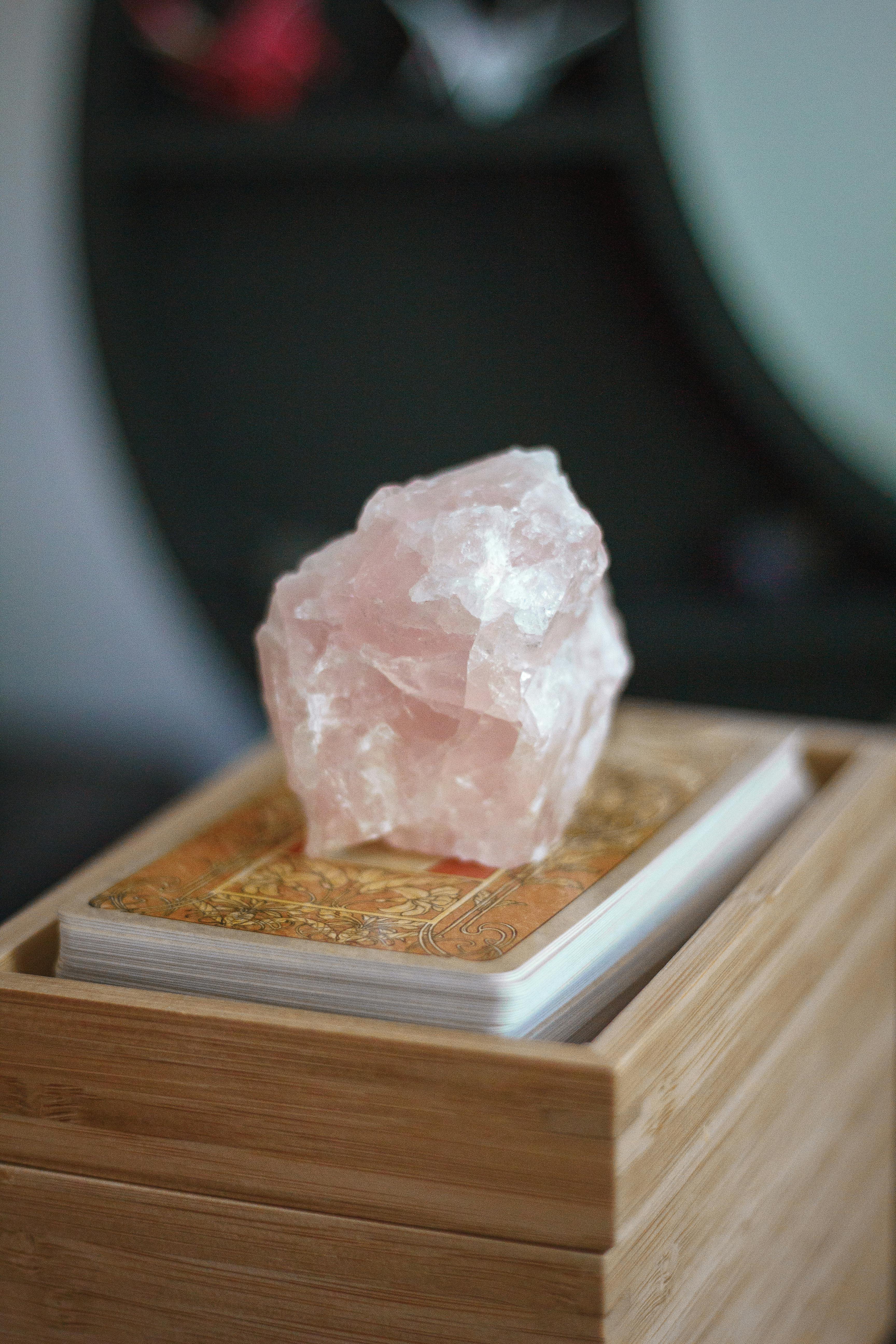
Rose quartz is a macrocrystalline variety of the large family of silica minerals, which forms primarily within pegmatites, under conditions of extreme heat and pressure during the cooling of terrestrial magma. This chaotic and slow process guarantees an internal structure that is never mathematically perfect. An authentic natural stone will almost systematically exhibit what are called inclusions. These are tiny traces of foreign minerals, gases, or liquids trapped during crystallization. To the naked eye, this translates into slight whitish veils, uneven opaque areas, or small internal fractures called "frosting." These alleged flaws are actually the geological identity card of your stone. A crystal block of a perfectly uniform pink, completely transparent, and free of any internal nebulosity should immediately raise your suspicions, as such perfection virtually does not exist in nature for this variety of quartz.
The Color Spectrum and the Origin of the Pink Hue
The exact origin of the color of rose quartz has long been debated by scientists, but it is now generally accepted that it results from complex charge transfer interactions between iron and titanium, or from micro-inclusions of fibers of a borosilicate called dumortierite. This natural alchemy produces a very specific color spectrum, ranging from a milky white with a hint of pink to a deep, strong pink. However, it is crucial to note that nature does not produce "fluorescent" pink, fuchsia, or aggressive candy colors. The hue of the true gem is always soft, subtle, and has a slightly powdery or pastel appearance. If the bracelet or pendant you are observing displays a saturated and garish color, it is highly likely that you are in the presence of mass-tinted glass or a low-quality quartz that has been heated and artificially irradiated with chemical pigments to mask its mediocrity.
Visual Methods to Identify an Authentic Stone
Careful observation of how the stone interacts with its light environment is the first step to successful expertise. Your eyes are your best tools for evaluating the mineral's integrity.
Analyzing Transparency and the Presence of Internal Veils
The transparency of rose quartz is a highly sought-after quality criterion in jewelry, but it is extremely rare. The vast majority of stones available for lithotherapy are translucent (allowing light to pass through but without clear visibility) or even almost opaque. Take your stone and place it in front of a soft light source. You should observe variations in density, clearer areas, and internal structures resembling small frozen clouds or crushed ice (the veils). Imitations made of glass or resin, on the other hand, are often absolutely clear, or if inclusions are artificially created, they take the form of perfectly spherical air bubbles, which is a geological impossibility in the natural formation of quartz.
Avoiding Overly Uniform or Artificially Vibrant Colors
Color distribution is an excellent indicator of authenticity. In a natural gem, pink is never distributed perfectly uniformly. You will notice color gradients, with some areas of the bead or pendant being slightly lighter or tending towards milky white. This irregularity is proof of natural crystallization. Industrial counterfeits, made from plastic molds or colored glass, show suspicious chromatic uniformity throughout the object. Furthermore, check the inside of the drilled holes on beaded bracelets: if the pink color is more concentrated and darker inside the hole, it undoubtedly means that the stone has been dipped in a dye that has accumulated in the cavities.
The Asterism Phenomenon as a Guarantee of Superior Quality
There is a particularly prized and precious variety of this mineral called "star rose quartz." If you shine a pinpoint light source (like a phone's flash) directly onto the polished surface of such a stone, you can see a luminous four- or six-rayed star gliding across the gem's surface. This magical optical phenomenon, asterism, is due to the reflection of light on the microscopic network of rutile or dumortierite fibers aligned within the stone. Asterism is the undeniable signature of a very high-quality natural stone and is never reproduced by common stone counterfeiters. Its presence guarantees the authenticity of your purchase one hundred percent.

Physical Tests and Vendor Evaluation
When visual examination still leaves room for doubt, appealing to material physics and sound commercial judgment can solidify your assessment.
The Temperature Test and Mineral Density
Natural stones have a very different thermal inertia than synthetic materials. Take the rose quartz in your hand or place it on a sensitive area of your skin, such as your cheek. The stone should give you an intense and immediate sensation of cold, and it will take a certain amount of time before it warms up to your body temperature. Glass, plastic, or resin, conversely, adapt almost instantly to body heat and feel lukewarm. Moreover, quartz is a dense and relatively heavy mineral (density of about 2.65). A bracelet or block that seems surprisingly light in the palm of your hand often betrays a low-quality plastic polymer manufacturing.
The Importance of Provenance and Merchant Guarantees
The ultimate tip for ensuring the quality of a gem lies in choosing your supplier. The most beautiful specimens of rose quartz historically come from Brazil, Madagascar, India, or the United States. A specialized vendor, passionate about lithotherapy, will always be transparent about the geographical origin of their stones. Avoid large generalist e-commerce platforms offering ridiculously low prices: the extraction, meticulous cutting, and polishing of a natural crystal have an incompressible cost. A reputable store will guarantee the absence of chemical treatments (unheated, undyed stones) and will be able to advise you precisely on the mineralogical properties of your purchase, thus guaranteeing the vibrational integrity of your precious mineral.
Conclusion
Acquiring a genuine rose quartz is a process that deserves the attention and respect due to the earth's millennia-old treasures. By mastering these five fundamental tips – understanding geological inclusions, analyzing color variations, looking for veils and asterism, the relentless thermal test, and demanding expertise from the vendor – you equip yourself with an infallible shield against deception. Knowing how to identify an authentic natural stone is the only guarantee of fully benefiting from its gentle vibrational frequency in lithotherapy. More than a simple commercial transaction, purchasing a quality stone is the first act on your journey towards inner peace and emotional healing. You are now perfectly equipped to find the pure and benevolent jewel that will serenely accompany your personal evolution and magnify your collection with elegance and truth.
FAQ: 10 Questions on Rose Quartz Authenticity
Is a rose quartz stone with no internal flaws necessarily fake?
Although a quartz of absolute crystalline purity exceptionally exists in high luxury jewelry, it is extremely rare and prohibitively expensive. In the common lithotherapy market, a 100% perfect stone is almost always synthetic glass.
Why has my rose quartz lost its color over the months?
This mineral is highly photosensitive. If you have regularly exposed it to direct and intense sunlight, its natural pigments have been destroyed by UV, which paradoxically proves that it was a real stone.
Is the glass-scratching test reliable for rose quartz?
Quartz has a hardness of 7 on the Mohs scale, which allows it to scratch classic glass (hardness 5.5). This is a good hardness test, but it should be done discreetly so as not to chip your stone.
Can real rose quartz contain air bubbles?
Absolutely not. Perfectly round air bubbles inside the mass are irrefutable and definitive proof that the object has been cast in glass or industrial resin.
Does very pale or almost white rose quartz have less energetic power?
No, the color concentration does not affect the crystalline structure or the vibrational frequency of the stone. A lighter stone is just as effective in diffusing the energy of unconditional love.
How to spot a stone that has been artificially tinted?
Observe the internal micro-fissures (frosting) or the drilling holes of the beads. If the pink color is highly concentrated there, forming darker lines, it means that dye has seeped in.
Is the price a good indicator of a real natural stone?
Yes, the extraction and artisanal cutting of a gem have a cost. Necklaces or bracelets sold at ridiculously low prices (a few euros) on generalist sites are invariably industrial counterfeits.
What is asterism and is it common on rose quartz?
Asterism is a star-shaped light reflection with six branches gliding over the polished stone. It is a magnificent but quite rare natural phenomenon, which justifies a higher purchase price.
Is it normal for my stone to feel heavy on the wrist?
Yes, that's an excellent sign. Quartz is a dense mineral (density 2.65). Imitations made of polymer plastic are much lighter and sound "hollow" when they clink together.
Can rose quartz deposits be found in Europe?
There are small deposits all over the world, including in Europe, but gem-quality stones used for jewelry creation mostly come from Madagascar, Brazil or India.
Read more
Your rose quartz absorbs your sorrows and requires rigorous maintenance to retain its luster. Learn how to cleanse your stone with water or by smudging, and discover why you should absolutely avoid...
A rose quartz bracelet is much more than just a piece of jewelry: it's the ideal gift for expressing unconditional love. Worn on a woman's wrist, this lithotherapy talisman promotes emotional heali...
Leave a comment
This site is protected by hCaptcha and the hCaptcha Privacy Policy and Terms of Service apply.