


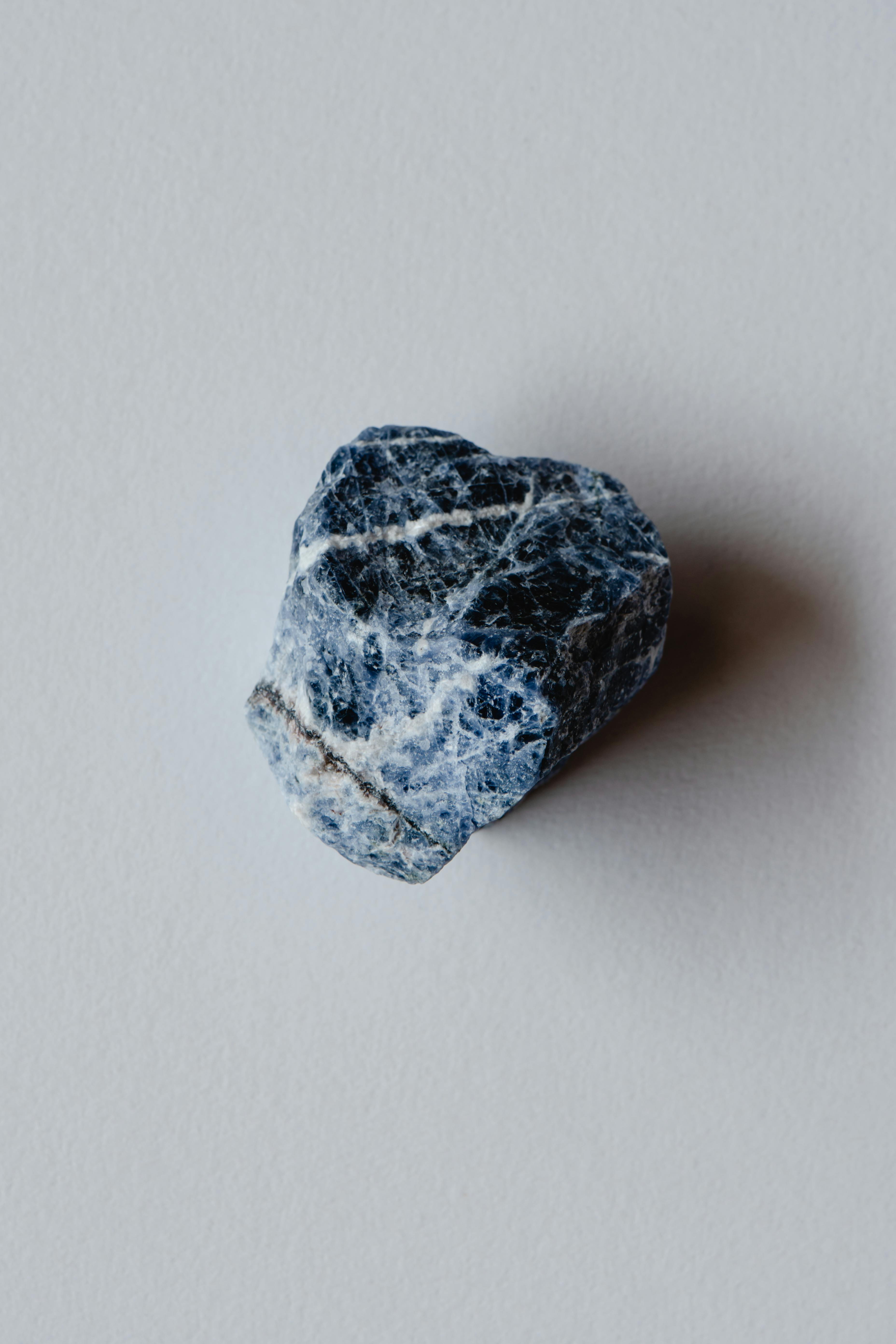
How to tell real Lapis Lazuli from imitation Howlite?
Table of Contents
Introduction
The global craze for Lapis Lazuli and the considerable rise of lithotherapy have unfortunately given birth to a thriving parallel market: that of counterfeits. The most widespread and deceptive imitation is undoubtedly dyed howlite. Buying a fake gem is not just an aesthetic or financial disappointment; it's especially missing out on the tremendous vibrations of the natural stone. To benefit from the soothing virtues of this stone of kings, it is absolutely crucial to know how to identify an authentic specimen. This expert guide reveals all the infallible methods, from visual tests to tactile analyses, to outwit counterfeiters and acquire a genuine mineral.

The Visual Characteristics of an Authentic Stone
The eye is the gemologist's first tool. True Lapis Lazuli has a complex and chaotic visual signature that is extremely difficult to convincingly reproduce artificially. Here are the visual clues to look for.
The Depth of the Blue Color
The blue of a true blue gem is described as a deep, intense, and velvety "ultramarine blue." It is almost never perfectly uniform. You will observe subtle nuances, very dark, almost indigo areas, and others slightly lighter. Conversely, dyed howlite often presents a very gaudy, artificial, flat blue of suspicious uniformity (like industrial paint). Moreover, if the blue color appears to accumulate darker in the cracks or grooves of the stone, it is an absolute sign of a dye bath: the stone is fake.
Pyrite and Calcite Inclusions
What makes Lapis Lazuli unique are its natural marbling. The true natural stone very often contains asymmetrical white calcite veins and shimmering golden pyrite flecks. Pyrite looks like tiny metallic flakes integrated within the rock, not placed on the surface. Counterfeiters struggle to imitate this: they sometimes use golden paints that have a matte and superficial appearance, or overly red copper flecks. As for howlite, it naturally has gray or black spiderweb-like veins. If you see a uniform blue with thin black lines (the natural network of howlite), you are holding an imitation.
Physical and Sensory Tests
If visual observation still leaves doubt, you can use your other senses and some basic physics concepts to identify the exact nature of the mineral you wish to acquire.
The Temperature and Density of the Stone
Like all real stones, Lapis Lazuli has excellent thermal conductivity. When you pick up the stone after it has been at room temperature, it should feel distinctly cold to the touch and take some time to warm up against your skin. Imitations made of resin or plastic take on the room temperature and warm up almost instantly. Furthermore, the true mineral is a dense and heavy rock. If the jewel seems strangely light for its volume, it is most likely a synthetic polymer.
The Scratch Test (Mohs Scale)
This test is destructive and should be carried out with caution, ideally on a hidden area of the jewelry (such as the inside of a ring). Lapis Lazuli is between 5 and 6 on the Mohs hardness scale, while howlite is much softer (around 3.5). A steel object (like a small penknife) will easily scratch howlite but will slide or only make a superficial mark on a good quality genuine Lapis. Another formidable test to reveal the deception of the dye: a cotton swab soaked in acetone (nail polish remover) rubbed on dyed howlite will instantly turn blue, revealing the stone's original white color underneath. Genuine Lapis will absolutely never bleed color.

Common Imitations on the Market
To outsmart the traps, one must know the methods used by counterfeiters. The market is full of alternatives that, although they may be pretty, do not possess the energetic properties of the protective stone in any way.
Dyed Howlite and Magnesite
This is the most common and profitable counterfeiting method. Howlite and magnesite are white, porous, and inexpensive stones, naturally traversed by a network of fine gray-black veins. Counterfeiters immerse them in powerful blue chemical dye baths. The stone absorbs the color, vaguely resembling the precious gem. However, the complete absence of golden pyrite, the presence of black spiderweb-like veins, and color transfer to the skin when sweating invariably betray this low-grade deception.
Resins and Reconstituted Stones
The other major category of fakes concerns synthetic materials. There is "reconstituted" Lapis Lazuli: these are waste and dust from real Lapis that are agglomerated with industrial glues and epoxy resins to form a solid block, then cut into beads. Although there is a mineral base, the stone has lost its natural crystalline structure, and its properties in lithotherapy are annihilated by the plastic. These stones are often suspiciously perfect. Finally, pure imitations made of Fimo clay, ceramic, or plastic, extremely light and warm to the touch, are easily identifiable by any enlightened amateur.
Conclusion
Recognizing a genuine Lapis Lazuli requires attention and a minimum of knowledge, but it's worth it. Avoid overly perfect colors, look for the inimitable sparkle of pyrite, and don't hesitate to test the stone's temperature. By acquiring an authentic specimen, you guarantee a lasting investment and give yourself the privilege of enjoying the ancient energy and unalterable truth of this prodigious stone of kings.
Frequently Asked Questions
Can the color of real Lapis Lazuli fade?
No, the color is the very nature of the rock. If it fades, it's a dyed stone.
Is it serious if there's no pyrite (gold) on my stone?
No, some deposits produce very pure stones without pyrite, highly prized in fine jewelry.
Is Lapis Lazuli expensive?
It's a medium-value stone. An unusually low price for a large piece of jewelry should alert you to a possible counterfeit.
Can I use the acetone test on all stones?
Only on a hidden area, because if it's an imitation, it will make an irreversible white stain.
Why is howlite so often used to imitate Lapis?
It is very porous, perfectly absorbs dyes, and costs infinitely less.
Does a reconstituted stone have energetic virtues?
In lithotherapy, it is considered that the modified structure and the presence of chemical glues cancel the stone's virtues.
Does real Lapis Lazuli have flaws?
Yes, these are natural inclusions (white calcite, small asperities). Total perfection often indicates a resin.
Is the stone's origin a guarantee of authenticity?
Afghanistan is the original source of the best quality, but genuine ones are also found from Chile or Russia.
How do I know if an online purchase is safe?
Check the store's reviews, the guaranteed "natural stone" label, and the right of return if the product seems fake.
Can real Lapis Lazuli stain my skin if I sweat?
Absolutely never. If your skin is blue when you remove a bracelet, it means the chemical dye is bleeding.
Can real Lapis stain my skin if I sweat?
Absolutely never. If your skin turns blue when you remove a bracelet, it means the chemical dye is bleeding.
Read more
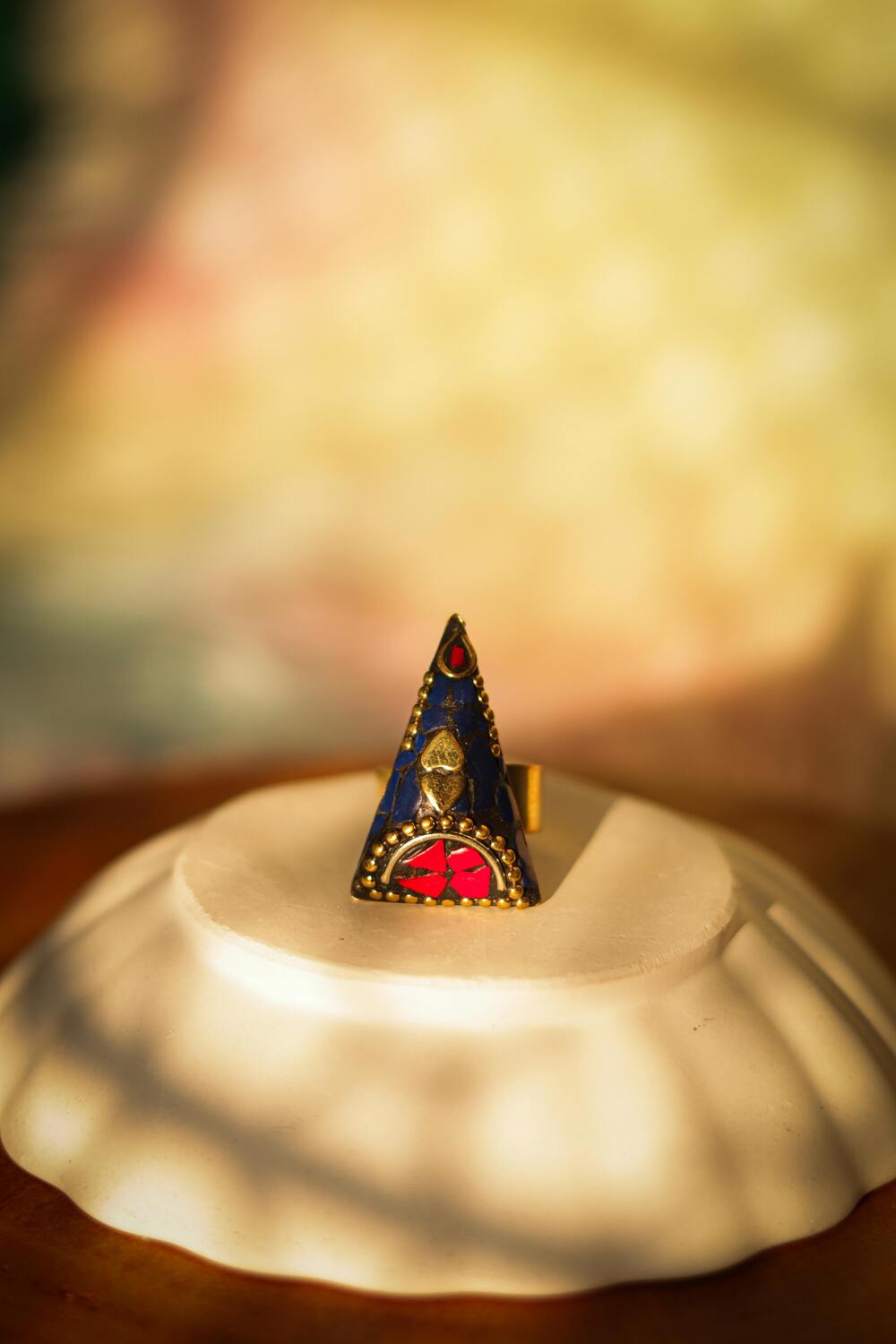
The Lapis Lazuli pendant is the ultimate tool for awakening your spiritual consciousness. Directly resonating with the third eye chakra, its indigo energy dispels mental fog and promotes lightning-...
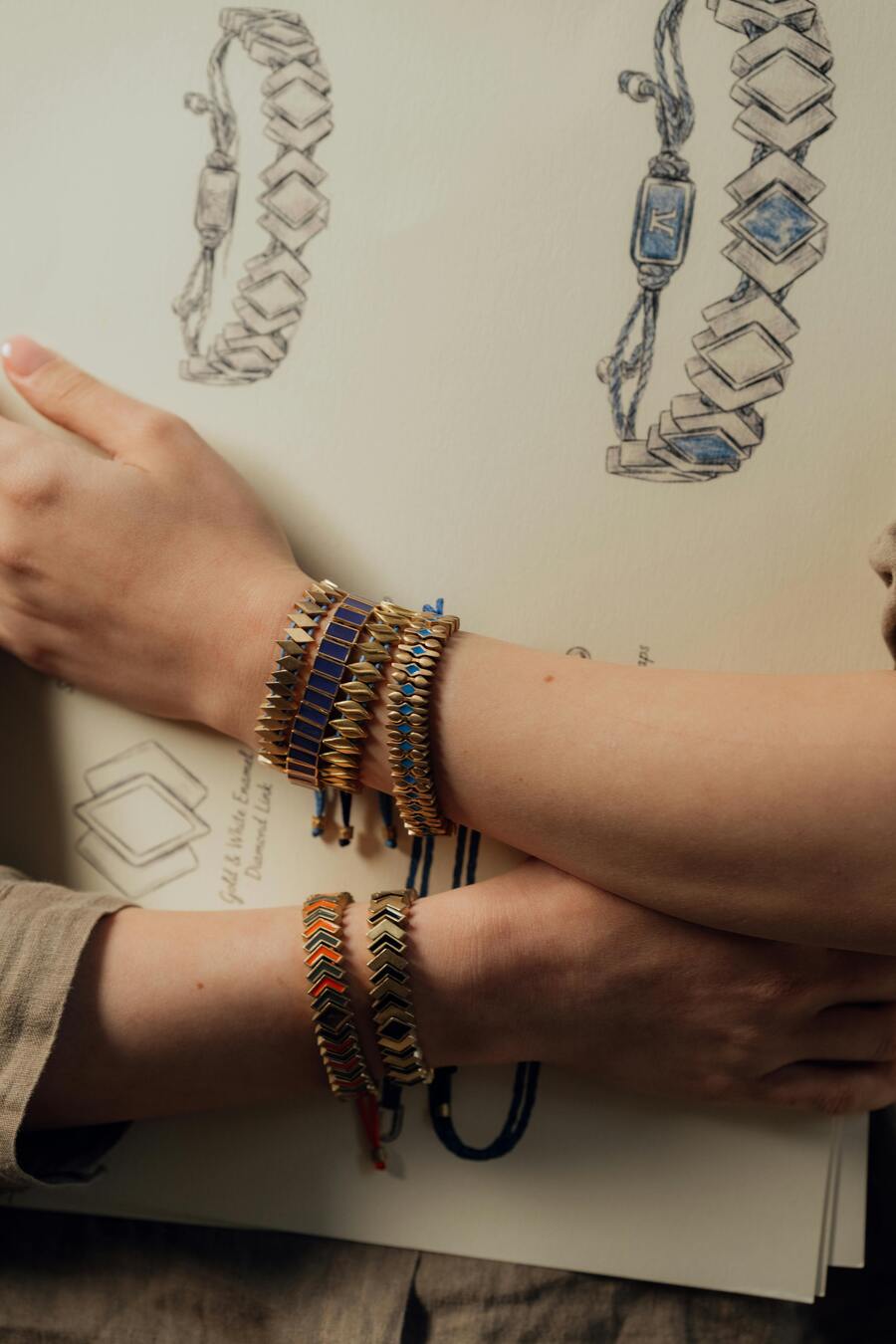
The Lapis Lazuli bracelet is the ultimate accessory for the contemporary woman. Enhancing any outfit with its indigo blue, it also acts as a shield against daily stress. Discover how this stone pro...
Leave a comment
This site is protected by hCaptcha and the hCaptcha Privacy Policy and Terms of Service apply.