


Natural Or Heated Citrine: The Expertise
Table of Contents
Introduction
Natural Citrine is one of the most sought-after stones in lithotherapy, but it is also one of the most counterfeited. The market is flooded with heat-treated amethysts sold under the name of Citrine. Learning to differentiate these two stones is essential to guarantee the authenticity of your jewelry and the effectiveness of their virtues. This expert guide reveals all the geological and visual secrets to recognize the real gemstone and acquire your solar adornment with complete confidence and peace of mind.

The Origins of Natural and Heat-Treated Citrine
To understand the fundamental difference between these two minerals, we must delve into the geological and human processes that give birth to this coveted golden color in the world of jewelry.
The Formation of Natural Citrine
Natural Citrine is a member of the quartz family whose yellow color is the result of an extremely slow natural thermal process, spanning millions of years. Buried deep within the Earth's crust, the stone is subjected to magma heat and colossal pressures, modifying the structure of the iron traces contained in the crystal. This rare phenomenon explains why authentic deposits are so few around the world, mainly located in Brazil and Madagascar. This perfect geological "baking" gives the gemstone a very subtle, pure hue, which carries within it all the memory of the earth. Acquiring a gem not modified by man is to acquire an invaluable piece of natural history, a treasure whose rarity justifies its value and prestige in the world of high jewelry.
The Heat-Treatment Process of Citrine
Faced with immense global demand and the scarcity of deposits, humans have sought to replicate nature's work. Almost all yellow stones sold on the mass market are actually amethysts that have been artificially heat-treated. Amethyst, an abundant violet quartz, is placed in industrial ovens at over 500 degrees Celsius. Under the effect of this violent thermal shock, the iron contained in the stone oxidizes rapidly, and the violet abruptly gives way to an intense yellow. Although this process approximately reproduces the natural mechanism, it is exponentially accelerated. These heat-treated stones are not fake crystals; they remain genuine quartz, but they have undergone a major human intervention to modify their appearance. It is essential for the buyer to be aware of this in order to determine whether the jewelry they covet has the value of an authentic mineral rarity.
Visually Recognizing Natural Citrine
The discerning eye of an expert or a passionate amateur can easily detect the visual clues that differentiate the authentic crystal from its laboratory heat-treated counterpart.
The Nuances of Natural Citrine
The aesthetic of Natural Citrine is characterized by remarkable delicacy and homogeneity. Its color ranges from a very pale, almost translucent lemon yellow to a very soft golden honey tone. One often perceives a slight pleochroism, a subtle variation in shade depending on the angle of light. Authentic crystal never exhibits opaque milky white at its base; its color is harmoniously distributed throughout the stone's structure. High-quality gems are strikingly clear, resembling true golden water droplets. When the stone is faceted, it captures light with refined and discreet elegance, never assaulting the eye with garish colors, thus proving its nobility and original geological integrity.
The Appearance of Heat-Treated Citrine
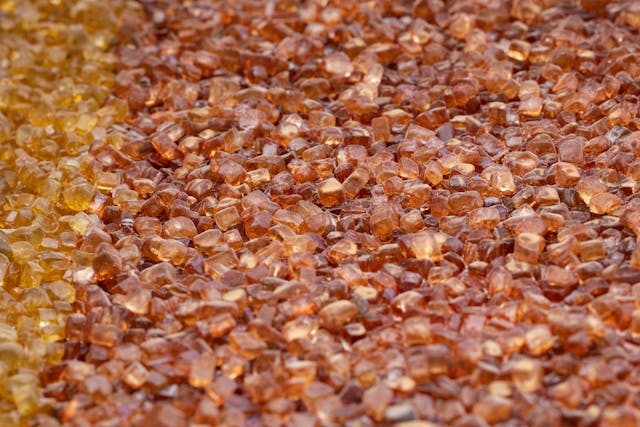
Conversely, heat-treated amethyst shows visual marks related to the violence of the industrial process. The stone's color is often a very pronounced orange-yellow, sometimes strongly tending towards brown or burnt caramel. The most revealing sign is color zoning: you will observe a very clear contrast between the intensely orange or brownish tip of the crystal and its base, which remains an opaque milky white. This abrupt demarcation is the typical result of artificial heating. Furthermore, extreme heat often causes internal microfissures and a slightly flaky or cloudy appearance inside the gem. Although these stones can offer a flamboyant and warm aesthetic on costume jewelry, they will never have the crystalline transparency and chromatic finesse of the true stone extracted intact from the earth's depths.

The Energy of Natural vs. Heat-Treated Citrine
Lithotherapy places vital importance on the original purity of minerals. The vibrations of a crystal are intimately linked to its history and the way it was extracted and treated before being set in jewelry.
The Power of Natural Citrine
Energy experts consider that Natural Citrine possesses a vibrational frequency of incomparable power and fluidity. Having undergone no human thermal trauma, the stone retains its intact crystalline structure and its original properties of abundance and purification. It is a clear and direct channel of energy, ideal for deeply harmonizing the solar plexus. Its vibrations are gentle but extremely persistent, promoting healthy spiritual elevation, genuine self-confidence, and an authentic connection to the forces of the universe. For purists of stone therapy, possessing the authentic crystal is an absolute necessity, guaranteeing perfect synergy between the human body and the millennia-old beneficial waves trapped in this masterpiece of geological creation.
The Virtues of Heat-Treated Citrine
Despite its modified origin, it would be wrong to deny all virtue to heat-treated amethyst. In lithotherapy, it is believed that the color yellow itself holds a chromotherapeutic power capable of positively influencing mood and stimulating optimism. Although its energetic field is considered more erratic and less pure than that of Natural Citrine, it still offers warm comfort and a beautiful dynamic of action. Moreover, it retains the soothing nature of the original amethyst. It is a very acceptable energetic alternative for small budgets or for purely decorative jewelry, provided one is aware of its true nature and does not demand from this stone the power of absolute transmutation that characterizes the authentic and extremely rare gem.
Conclusion
Knowing how to recognize authentic Natural Citrine is the key to investing in a piece of jewelry of inestimable value, both aesthetically and spiritually. Its rarity and purity make it a treasure coveted by all discerning women. Demand excellence for your adornments and let yourself be enchanted by the sunny transparency of our finest selections. To discover certified creations that will truly brighten your daily life, visit the magnificent collection of vibrational jewelry at our Moment Ici boutique without delay.
Frequently Asked Questions
How do I know if my jewelry contains an authentic stone?
Carefully observe the stone: if it has an opaque white base and a vivid orange tip, it is most likely an artificially heat-treated gem.
Is price a good indicator of authenticity?
Absolutely, a natural crystal, due to its extreme global rarity, will always be sold significantly more expensive than an amethyst that has been processed in an industrial oven.
Are both types of stones cared for in the same way?
Yes, both are still from the quartz family and should be cleaned with a soft cloth, carefully avoiding harsh chemicals.
Is a heat-treated stone considered fake jewelry?
No, it remains a natural stone (quartz), but its appearance has been modified by humans; it is not a piece of plastic or glass.
Which of these two minerals shines brightest on a ring?
Natural crystal, often with greater clarity and devoid of internal microfissures due to thermal shock, will offer a much more spectacular brilliance.
Can I use the heat-treated specimen for lithotherapy?
Yes, it retains the virtues of yellow chromotherapy for joy, even if purists will always prefer the intact original energy of the pure mineral.
What metal color should I choose to accompany pale natural crystal?
White gold or solid silver beautifully highlight the delicacy and lemon-yellow transparency of a high-quality genuine gem.
Does sun exposure affect these two stones?
Prolonged exposure to intense UV rays can cause both stones to fade over time, so store them out of direct sunlight when not being worn.
Read more

Wearing a citrine pendant nestled in your décolletage is the secret to cultivating unwavering optimism. Acting as a true energetic shield, this solar gem dispels stress and enhances your daily outf...
Like all minerals, citrine needs to be purified and recharged to maintain its wonderful abundance energy. Be careful, this solar gem cannot withstand salt water or scorching sun! Discover our gentl...
Leave a comment
This site is protected by hCaptcha and the hCaptcha Privacy Policy and Terms of Service apply.